On this page
For parents exploring weak foot training games for children, here's what our Pitch Ready coaches suggest.
Developing a child's weaker foot is a cornerstone of becoming a truly versatile and unpredictable player. While the temptation might be to just tell them to "use your other foot," sustained improvement comes from engaging, fun activities that build confidence and skill simultaneously. Here at Pitch Ready Football, we champion methods that make learning enjoyable, and that's especially true for weak-foot training.
The 'Mirror' Game
This is a fantastic starting point for younger players, focusing on basic ball control and movement with their weaker foot.
How to Play:
- Set up a small square area (e.g., 5x5 yards).
- One child (the 'leader') dribbles freely within the square, using only their strong foot.
- The second child (the 'mirror') tries to mimic the leader's movements and dribbling patterns, but they must use only their weak foot.
- Encourage the leader to change direction and speed frequently, presenting a challenge to the mirror.
- After 2-3 minutes, swap roles.
Why it Works: It removes the pressure of competition and focuses entirely on observation and adaptation. The 'strong foot' leader provides a visual guide, and the 'weak foot' mirror isn't trying to score or beat an opponent, just to keep up. This builds muscle memory and control naturally.
Weak-Foot Gates & Obstacles
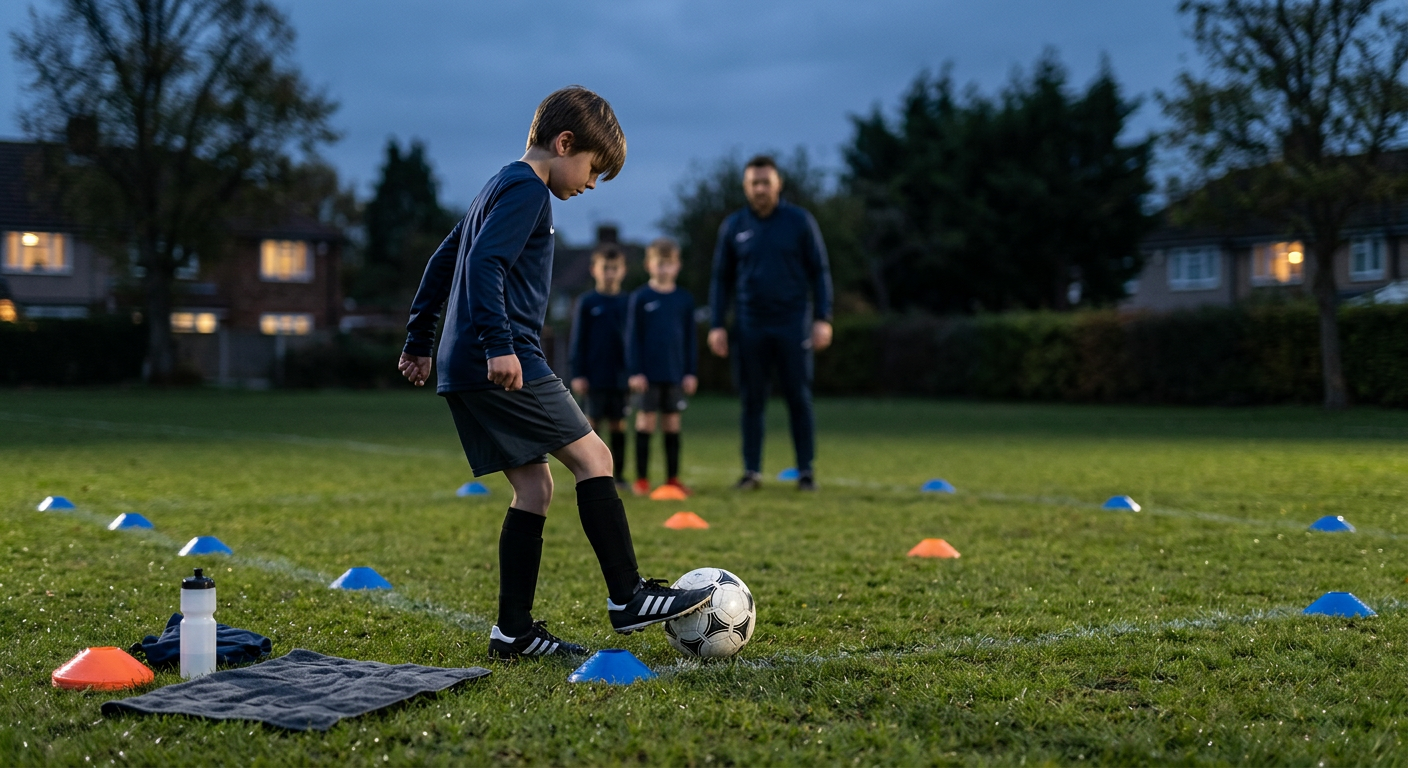
Create a mini-obstacle course that forces weak-foot engagement. This can be adapted for various age groups and skill levels.
Setting Up:
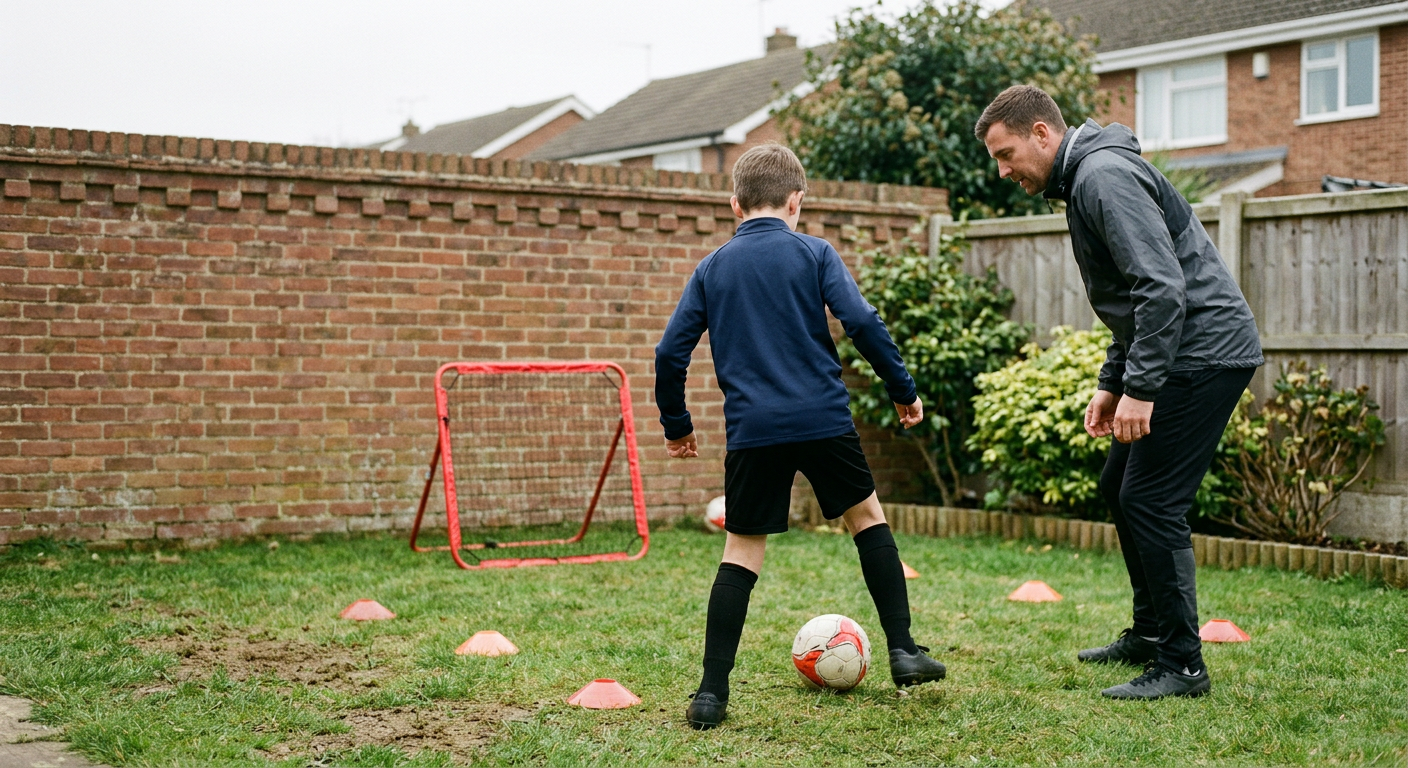
- Use cones, jumpers, or even household items to create a series of "gates" (two markers about a yard apart).
- Arrange them in a zig-zag, straight line, or circular pattern.
- Add in a larger "target" area at the end, like a mini-goal or a hula hoop on the ground.
The Drill:
- The child must dribble through each gate, using only their weak foot.
- For older children, add a rule that they must touch the ball with the inside of their weak foot through one gate, then the outside of their weak foot through the next.
- Once they navigate the course, they finish with a weak-foot shot or pass into the target.
- Time them for motivation, or encourage them to beat their "personal best."
Benefits: This activity is great for developing different weak-foot surfaces (inside, outside), agility, and decision-making on the move. The defined gates provide clear objectives, and the added pressure of a target makes the final weak-foot contact purposeful.
Weak-Foot "Traffic Lights"
This game adds a reactive element and works well for small groups.
Players: 2-4 children. Equipment: One ball per child, and a coach/parent to call out commands.
Game Play:
- Each child has their own ball and dribbles within a designated area, using only their weaker foot.
- The coach calls out commands:
Green Light: Dribble freely with the weak foot. Red Light: Stop the ball dead with the sole of the weak foot. Amber Light: Slow down, perform weak-foot turns (e.g., drag-backs, step-overs) around the ball. Reverse: Dribble backwards with the weak foot for three touches.
Why it's Effective: The unpredictability of the commands keeps children engaged and forces them to quickly process and execute actions with their weaker foot. It combines dribbling speed, stopping, turning, and even backward movement, all crucial for developing all-round weak-foot control. It's a key part of what we teach in our specialised weak-foot development sessions.
Partner Pass & Move (Weak Foot Only)
For slightly older children ready for basic passing and receiving.
How to Play:
- Two players stand 5-7 yards apart.
- They must pass and receive the ball using only their weaker foot.
- Encourage crisp, accurate passes that meet their partner’s weak foot.
- Add a progressive element: one touch passing, then two touches, then one touch again.
- Introduce movement after passing: pass and then sidestep to the left or right, forcing the receiver to adjust.
Skills Developed: This drill hones weak-foot passing accuracy, receiving technique, and spatial awareness. The limited contact (just the weaker foot) forces players to concentrate more on ball contact and body positioning.
Consistency is key with all these drills. Short, regular sessions are far more effective than infrequent, long ones. Make it fun, offer encouragement, and celebrate every small improvement. Remember, the goal isn't immediate perfection, but gradual, confident development of that all-important weaker foot.
Want to see how Pitch Ready Football can help your child develop their weaker foot and overall game? Book a free discovery call to discuss an evaluation session tailored to their needs.
Frequently asked questions
Written by
Founder and head coach at Pitch Ready Football. Alejandro runs one-to-one and small-group youth coaching sessions across North London, focused on ball mastery, confidence, and long-term development for children of all abilities.