On this page
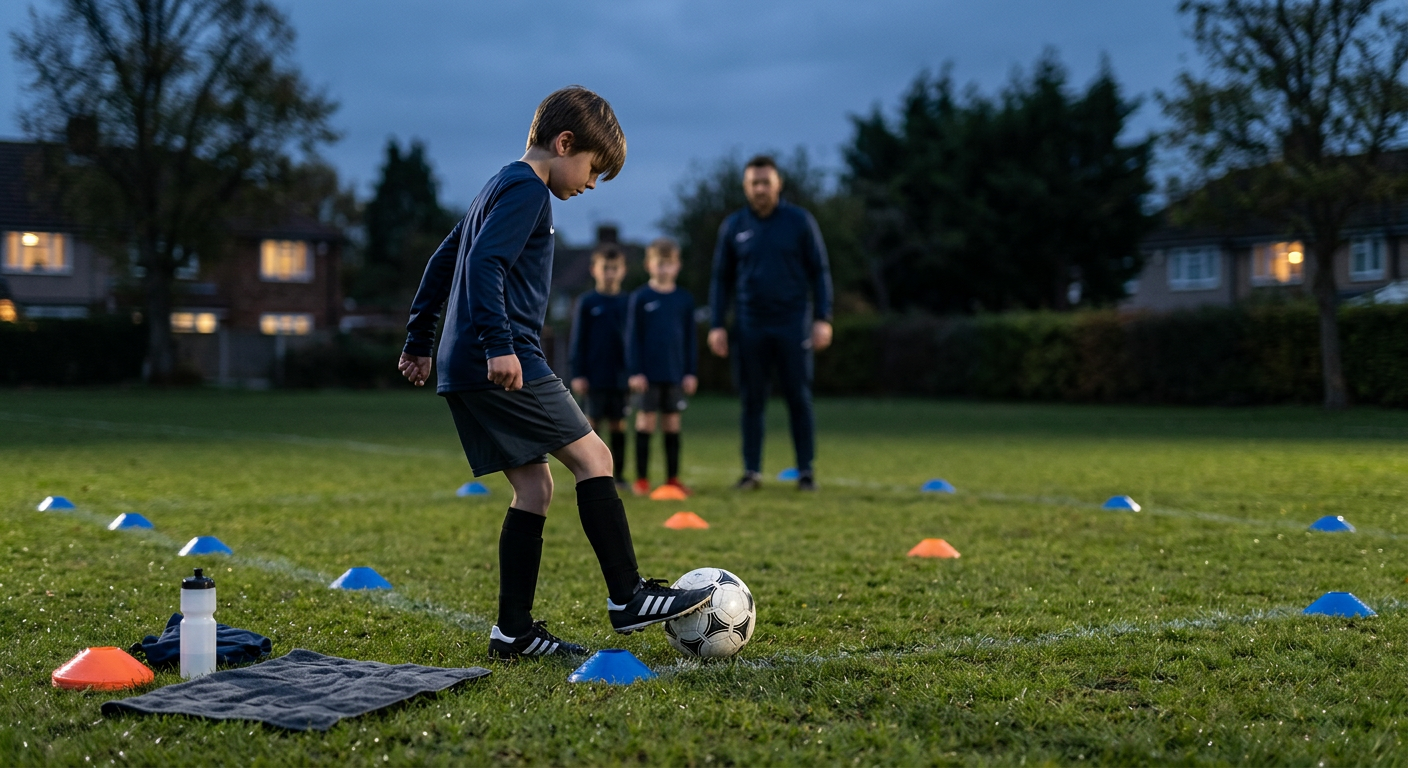
If your child plays up top and is only judged on goals, they'll spend more time frustrated than improving. Good striker coaching for children builds three things — movement, finishing habits, and the resilience to keep going when a match doesn't fall for them. Here's how we split it up in striker sessions.
Movement: the part parents rarely see
Great young strikers move even when they're not near the ball — checking away and coming short, spinning in behind, drifting across the last defender. We shadow these runs in the garden without a ball first, then add a passer, then add pressure.
Finishing habits
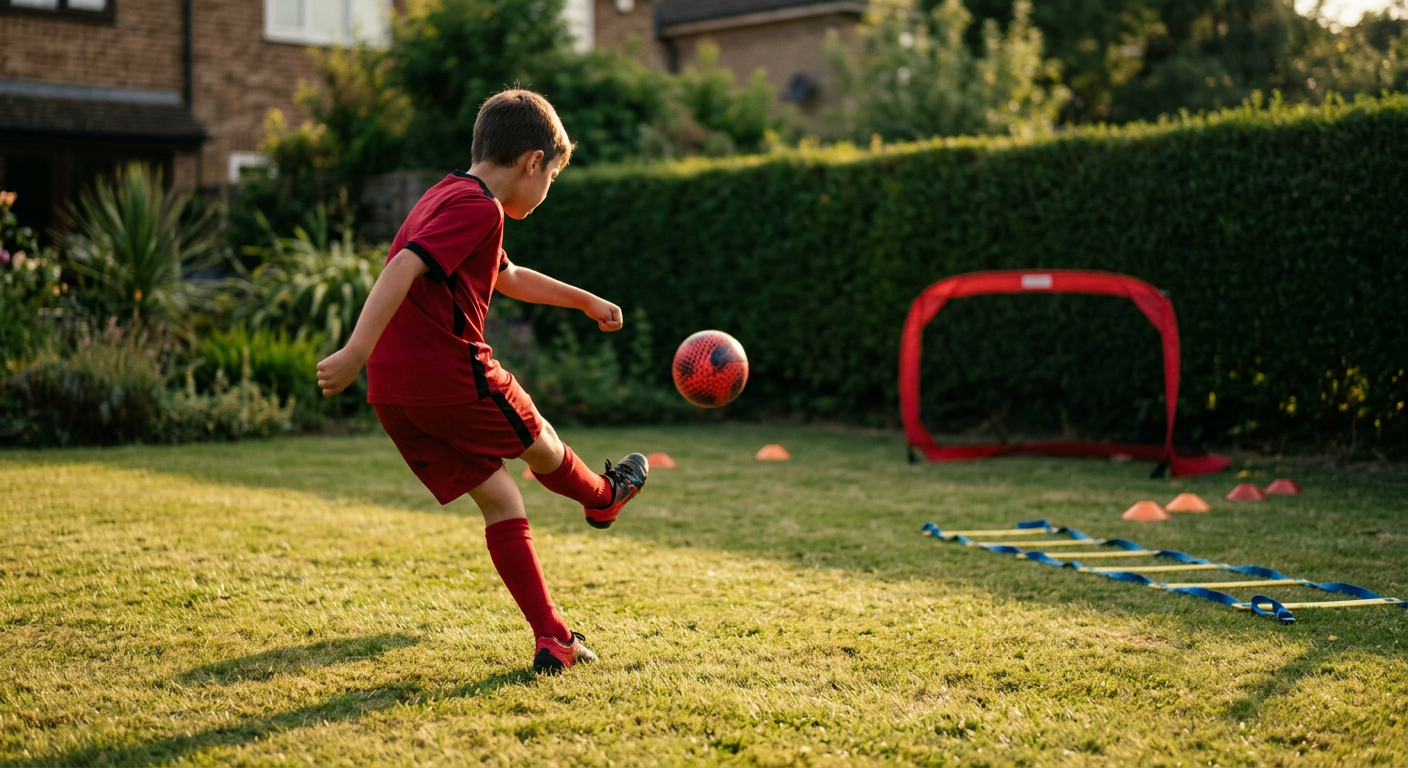
Side-foot corners over power. First-time finishes over turning and dwelling. Always following in for rebounds. These habits are worth more than any single 'wonder goal' technique.
Confidence: how to keep it after a bad match
Every young striker will have a game where nothing comes off. We keep a running note of what did go well — good runs, good pressing, one clean strike. Confidence stays when children know the whole picture, not just the score line.
Pressing from the front
Modern coaches want their strikers defending. If your child can press the centre-backs sensibly for two minutes at a time, they'll get picked. It's a huge, underrated edge.
What to practise at home
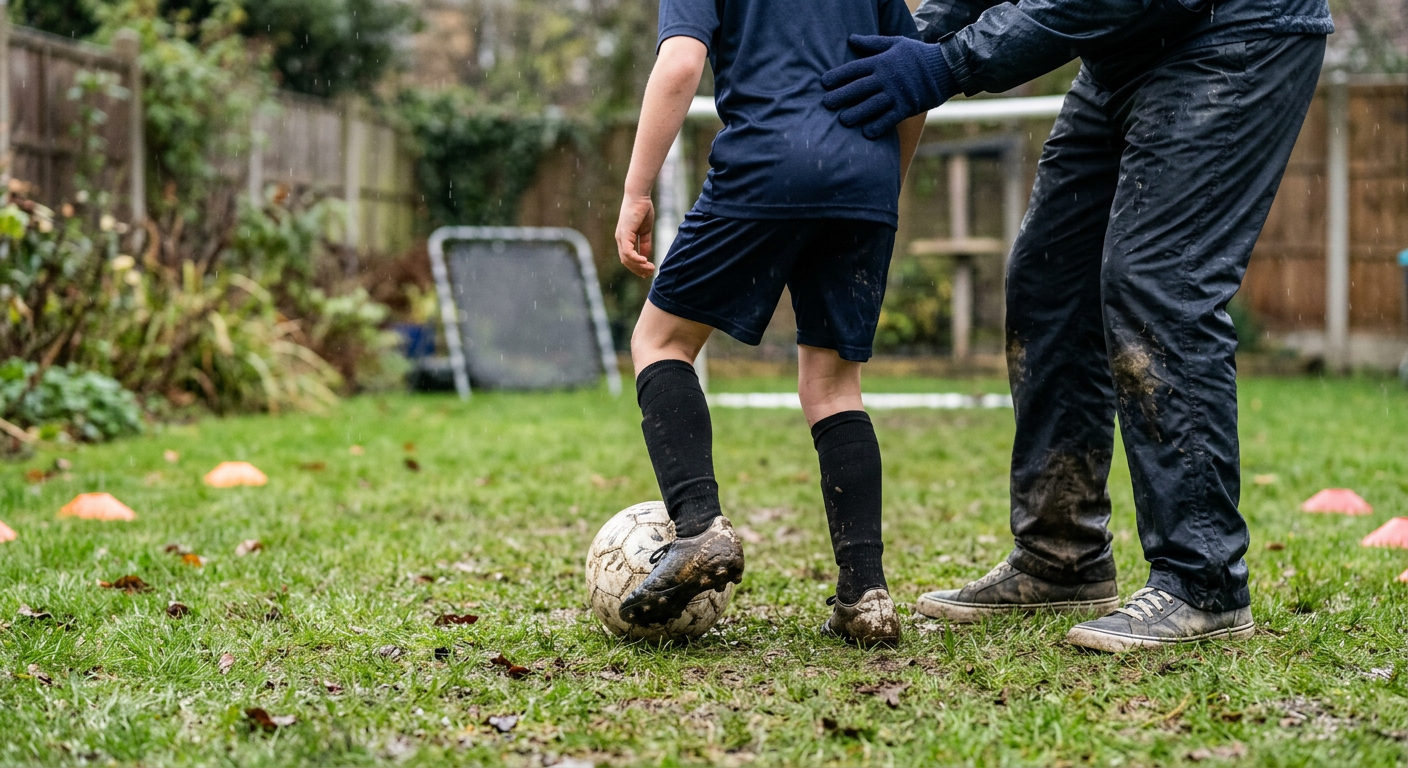
Developing a sharp eye for goal requires consistency outside of team training. Parents can help by setting up simple drills in the garden or a local park that focus on technique rather than power. One of the most effective ways to support striker coaching for children is to encourage "one-touch" finishing. Set up a small goal and stand as the server. Roll the ball across your child's path at varying speeds and ask them to direct the ball into the corners of the net using the inside of their foot.
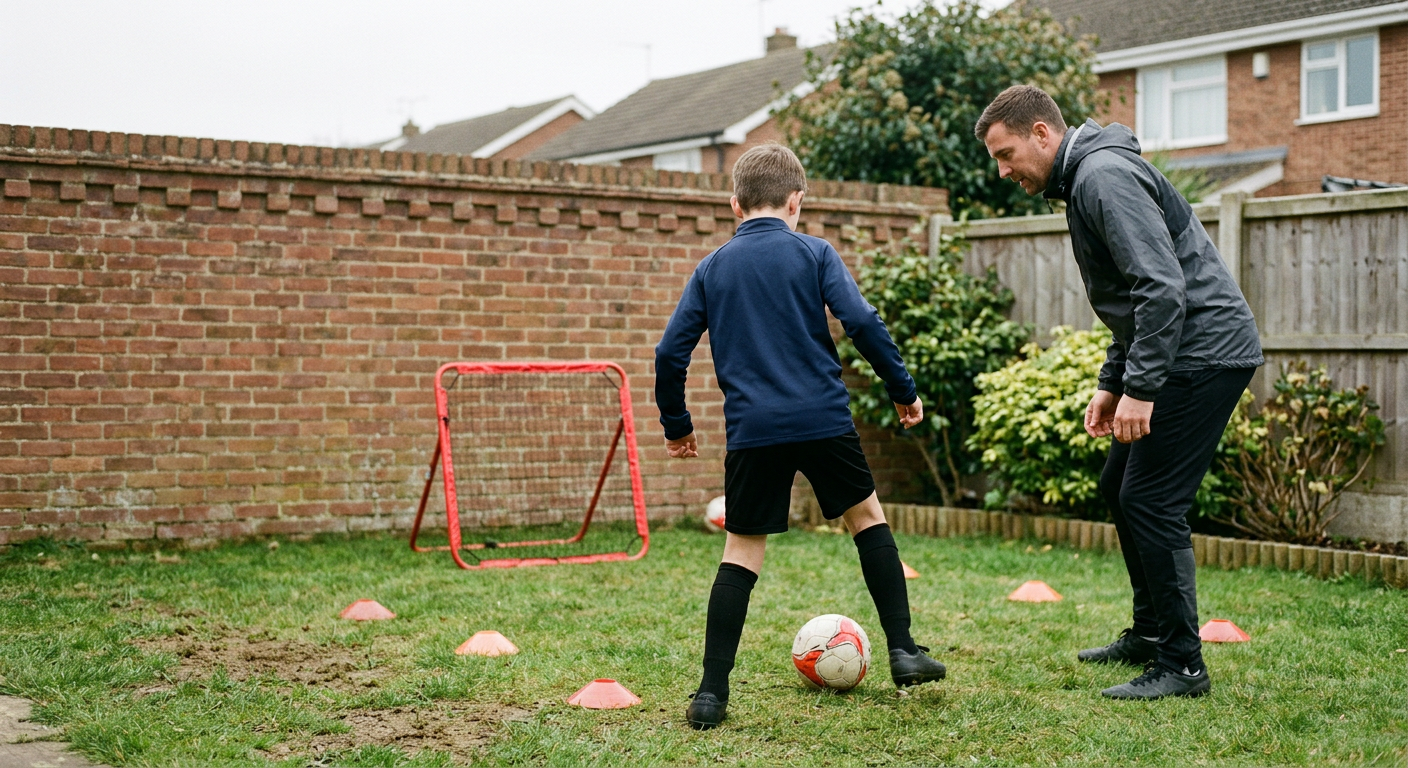
Movement is another area that can be refined at home. You do not need a full pitch to practice losing a defender. Use two markers to represent a goal and another two to represent a defender. Have your child start behind the "defender," make a sharp darting run to one side, and then quickly change direction to receive a pass in space. This helps them understand that the best strikers often do their most important work before the ball even reaches them.
How our sessions help
Our one-to-one coaching in Enfield focuses on the technical nuances of being a forward. We break down the mechanics of different types of finishes, from composed side-foot placements to strikes using the laces. By working individually, players receive immediate feedback on their body positioning and balance, which are vital for accuracy under pressure.
We also place a heavy emphasis on situational awareness. We simulate match scenarios where a striker must decide whether to hold the ball up to bring teammates into play or turn and drive at the goal. These sessions are designed to build a player's toolkit of movements, such as peeling off the back of a defender or making a near-post run. This targeted approach helps young players feel more prepared and composed when they find themselves in goal-scoring positions during their weekend matches.
Ready to see this in a session?
If your child would benefit from focused 1-to-1 coaching, shooting and finishing sessions with Pitch Ready or get in touch to talk through what they need next.
Frequently asked questions
Written by
Founder and head coach at Pitch Ready Football. Alejandro runs one-to-one and small-group youth coaching sessions across North London, focused on ball mastery, confidence, and long-term development for children of all abilities.