On this page
For parents exploring practise football small garden, here's what our Pitch Ready coaches suggest.
For many young footballers in Enfield, a large, open space for practice isn't always readily available. This doesn't mean skill development has to stop when the park isn't an option. In fact, a small garden can be a fantastic, safe environment to fine-tune specific aspects of your game, especially ball mastery.
The Micro-Environment Advantage
Think of a small garden not as a limitation, but as a dedicated training zone. The confined space naturally encourages more precise ball control, quicker decision-making, and a higher repetition rate for fundamental techniques. It forces players to be spatially aware and to develop a softer touch – skills that are invaluable on any size pitch.
Essential Gear for Garden Training
Before you start, a few key pieces of equipment will make your garden sessions more effective and safer for both the player and your plants:
- A Softer Ball: An old, slightly deflated football, a Futsal ball, or even a foam ball can reduce the risk of damage to windows, fences, or cherished flowerbeds. It also encourages a gentler touch.
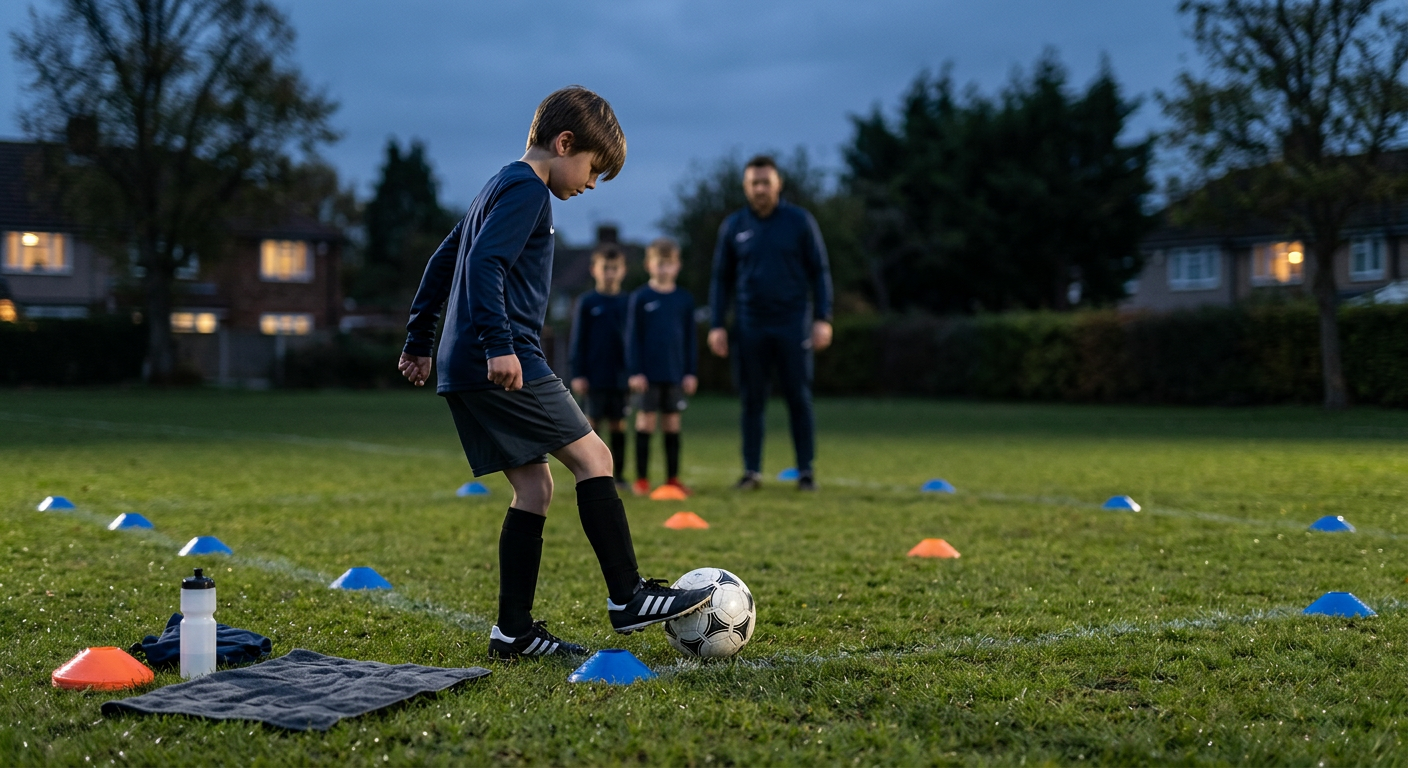
- Cones or Markers: These are crucial for creating mini-drills, defining boundaries, and setting up targets. You don't need fancy ones – old socks, small stones, or even shoes will do.
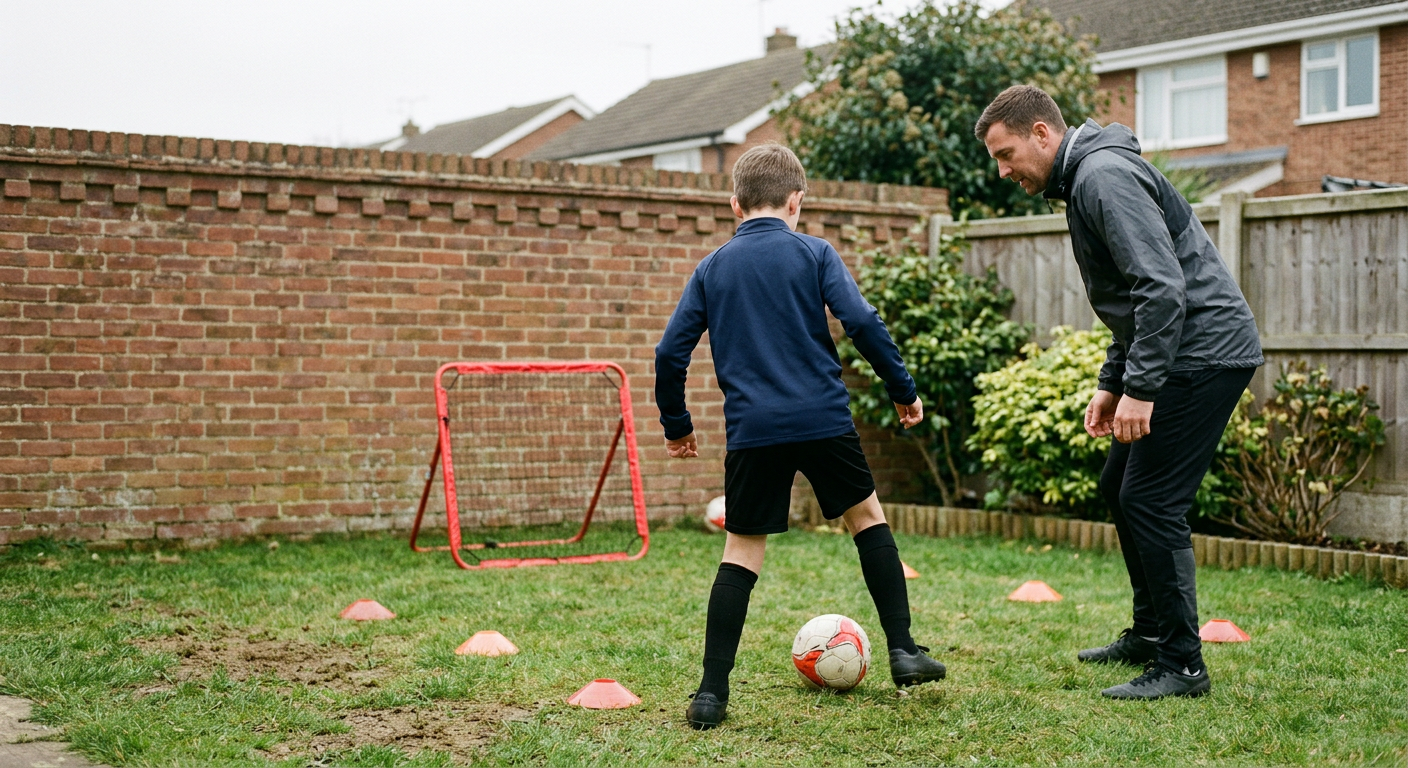
- Netting (Optional but Recommended): If you have a particularly enthusiastic kicker or an immaculate garden, a simple rebounder net or a length of netting secured between posts can save a lot of retrieving and prevent breakages.
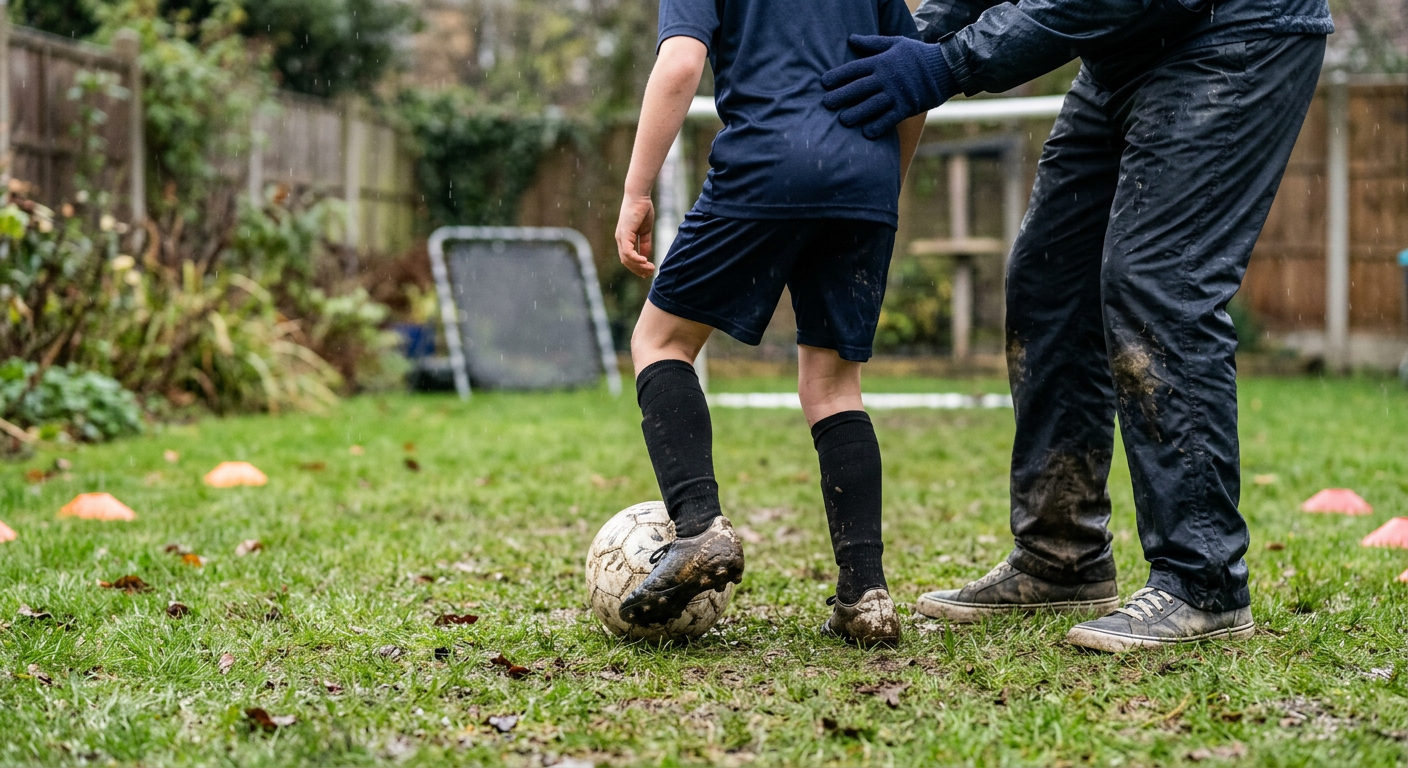
- Appropriate Footwear: Trainers or AstroTurf boots are usually best. Studs will tear up the lawn, and bare feet can lead to stubbed toes.
Drills for Confined Spaces
The focus in a small garden should always be on individual technique and repetition. Here are some ideas:
Ball Control and Dribbling
This is where the small space excels. Forget long runs; concentrate on close control.
- Tight Cone Dribble: Set up 4-6 cones in a small square or zigzag pattern. Dribble slowly through them, using the inside and outside of both feet. Focus on keeping the ball glued to your foot.
- Figure-Eight Dribble: Place two cones about 2-3 feet apart. Dribble the ball in a figure-eight pattern around them, constantly changing direction and using both feet.
- Sole Rolls and Taps: Stand still and just practice rolling the ball with the sole of your foot, from side to side, back and forth. Then try quick taps with the laces, keeping the ball under your body.
First Touch and Receiving
Rebounders are excellent for this, but if you don't have one, a sturdy wall can work just as well (with permission, of course!).
- Wall Passing: Stand a few feet from a wall. Pass the ball to it and receive it back, focusing on a soft first touch that sets you up for the next pass. Vary the power and angle of your passes.
- Receive and Turn: Mark out a small square. Pass to the wall, receive the ball, and then quickly turn with it inside the square, using both sides of your body.
Passing Precision
While you can't hit 30-yard screamers, you can work on accuracy over shorter distances.
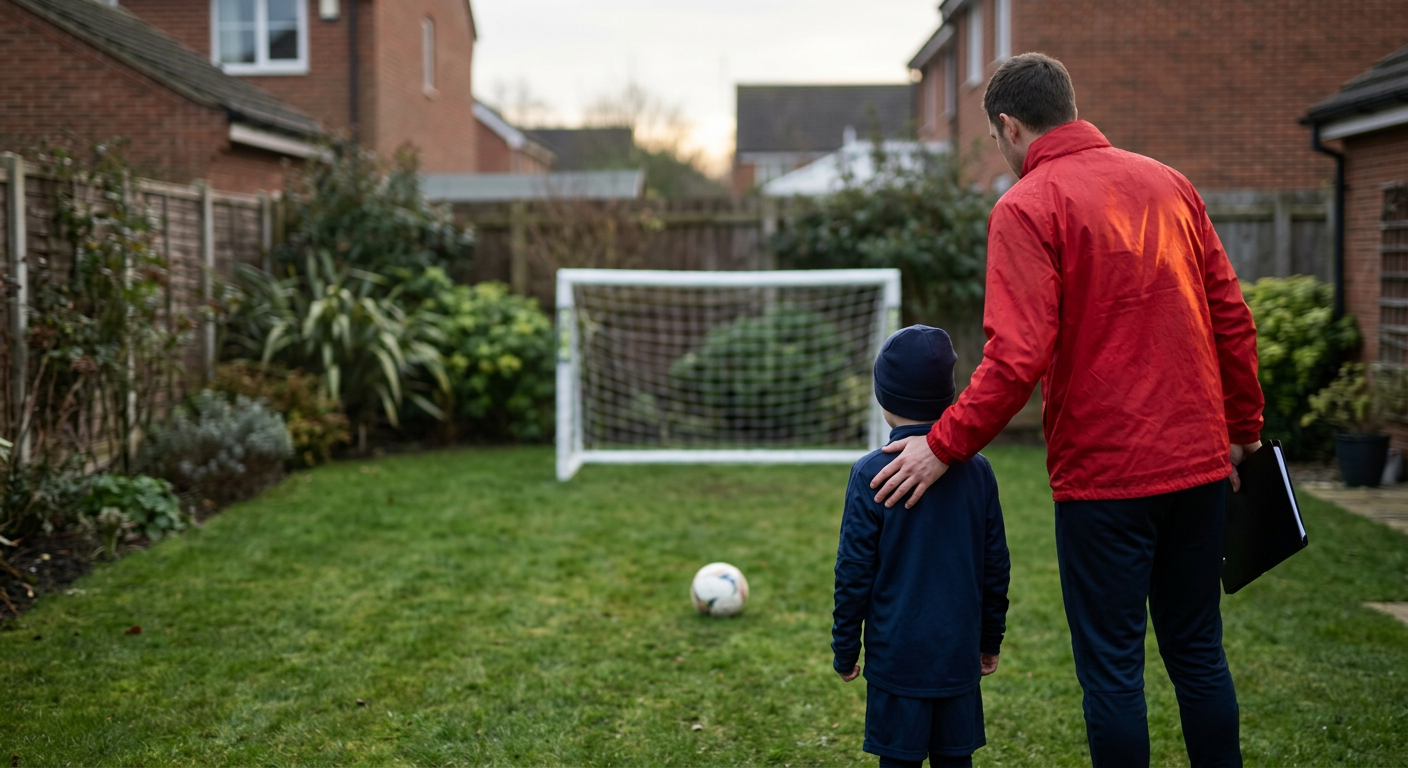
- Target Practice: Place a cone, a small bucket, or even just a designated spot on the lawn. Practice passing the ball with different parts of your foot (inside, laces, outside) to hit the target. Start close and gradually increase the distance if space allows.
- One-Touch Passing: With a parent, sibling, or even the wall, practice quick one-touch passes. This improves reaction time and the ability to release the ball quickly.
For aspiring players in Winchmore Hill or Grange Park, dedicated professional guidance on these types of fundamental skills can rapidly accelerate development. Our one-to-one sessions often focus on these essential techniques, especially our ball mastery programme.
Safety and Garden Etiquette
- Communicate: Always let others know you're practicing in the garden.
- Clear the Area: Remove any delicate items, ornaments, or garden tools before starting.
- Be Mindful of Neighbours: Try to avoid hitting the ball against shared fences or making excessive noise.
- Footwear: As mentioned, sensible shoes protect both feet and lawn.
- Listen to the Garden: If you hear a clatter, assess the damage and learn from it.
A small garden can be a fantastic, accessible training ground. Consistent, focused practice here builds a strong foundation of technical skill and confidence that will translate to bigger pitches.
Ready to take your garden practice to the next level? Consider booking an evaluation session to see how we can tailor a development plan for you.
Frequently asked questions
Written by
Founder and head coach at Pitch Ready Football. Alejandro runs one-to-one and small-group youth coaching sessions across North London, focused on ball mastery, confidence, and long-term development for children of all abilities.