On this page
Mastering Close Control Under Pressure: Drills for Young Players
In football, having excellent close control is fundamental. But the real test of a player's ability often comes when they're under pressure from an opponent. It's one thing to dribble in open space; it's quite another to maintain possession and execute a pass or shot with a defender snapping at your heels. As coaches, we see a big difference in how young players handle this. This post will outline practical drills and approaches for parents and players to specifically improve close control when the pressure is on.
Start Slow, Build Speed and Opposition
The biggest mistake we see when players try to improve close control under pressure is jumping straight into a full-speed, high-intensity scenario. Just like learning any new skill, it’s crucial to break it down.
- Walk-throughs: Begin without a defender. Focus purely on manipulating the ball with both feet, using different surfaces (inside, outside, sole).
- Shadow Defender: Introduce a "shadow" defender who doesn't actively try to tackle, but moves with the attacker, creating an awareness of space and body positioning. This helps players get used to someone being near them without the fear of losing the ball.
- Passive Defender: The next step is a passive defender who has one foot fixed or moves slowly but offers a body to dribble around. This starts introducing decision-making – when to push the ball, when to shield.
- Active Defender (Limited Space): Gradually increase the defender's intensity, but limit the space first. This forces quick decisions and tighter ball manipulation.
Focus on Footwork and Body Shape
Good close control under pressure isn't just about what your feet are doing; it's also about your body.
- Small Touches: Emphasise playing the ball close to the body, keeping it within arm's reach. This allows for quick changes of direction and protects the ball.
- Different Surfaces: Encourage the use of the inside, outside, and sole of the foot. The sole is particularly useful for stopping and rolling the ball, changing direction quickly in tight spaces.
- Shielding: Teach players to use their body effectively. When an opponent approaches, drop a shoulder, put your body between the ball and the defender. This isn't just about strength; it's about intelligent positioning.
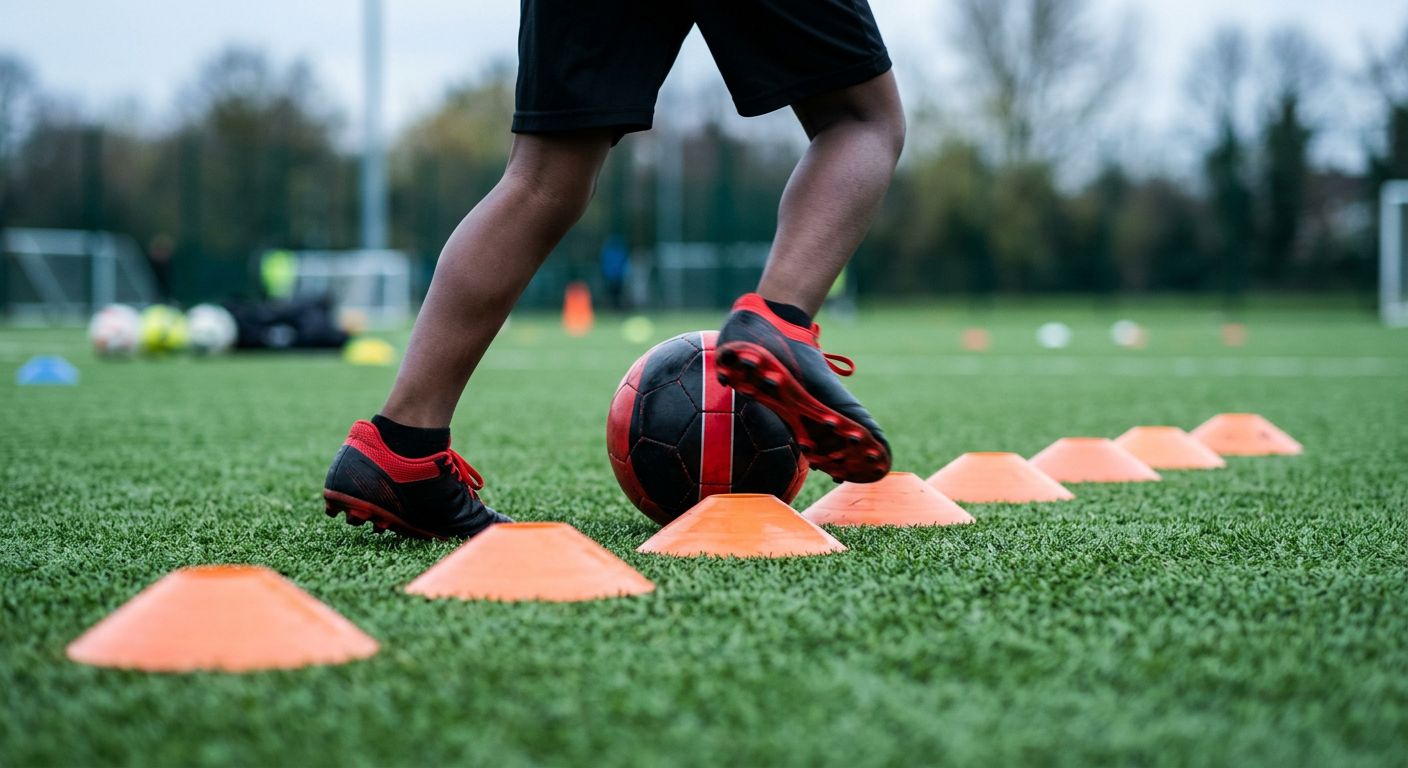
- Head Up: While this sounds obvious, under pressure, many young players glue their eyes to the ball. Drills should encourage quick glances up to scan for opponents, teammates, and exit routes. Cone dribbling drills with numbers or colours to identify can help with this.
Small-Sided Games (SSGs) and Conditioned Play
Simply adding a defender to a drill can still feel artificial. The best way to simulate match pressure is through conditioned small-sided games.
- Numbers Game: Play 1v1, 2v1, 2v2 in small grids. This inherently creates pressure situations.
- Limited Touches: In a small game, enforce a maximum number of touches (e.g., 2 or 3 touches). This forces quick control and decision-making when receiving the ball under pressure.
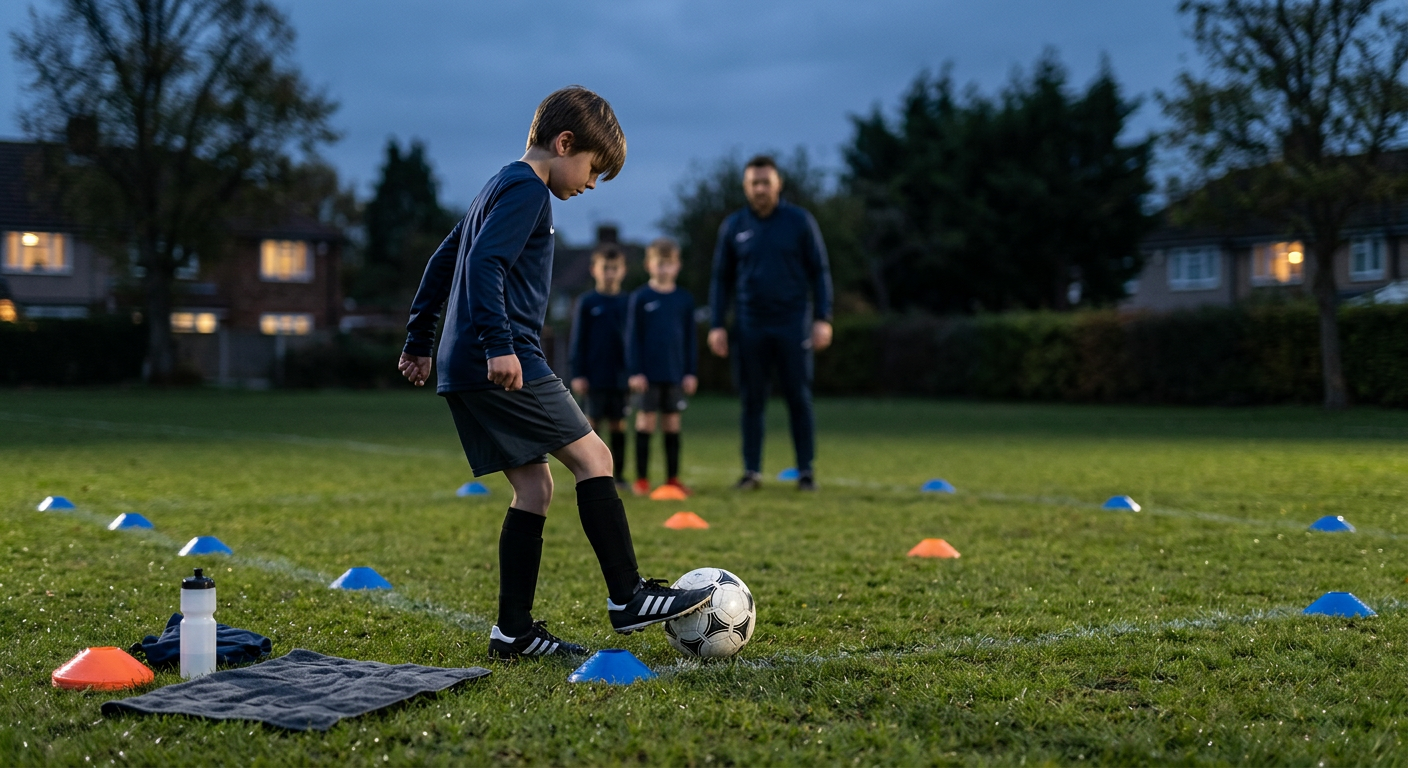
- Pressure Zones: Designate "pressure zones" on the pitch where players are immediately challenged by a defender. This simulates breaking lines or receiving in dangerous areas. For example, if you're coaching a small group at Enfield Playing Fields, create a central zone where any attacker entering is immediately shadowed by a defender.
- "Keep Ball" Variations: The classic "Rondo" or "Piggy in the Middle" is excellent for this. Players work in a tight circle, trying to keep possession from one or two defenders in the middle. This drill hones first touch, quick passing, and awareness of space.
Consistent Practice is Key
Improving close control under pressure isn't a one-off fix; it requires consistent, deliberate practice. Even 10-15 minutes of focused work a few times a week can make a significant difference. At Pitch Ready Football, our sessions often incorporate specific drills designed to improve these core skills in a progressive way, ensuring players build confidence and proficiency. This is a big focus of our ball mastery sessions.
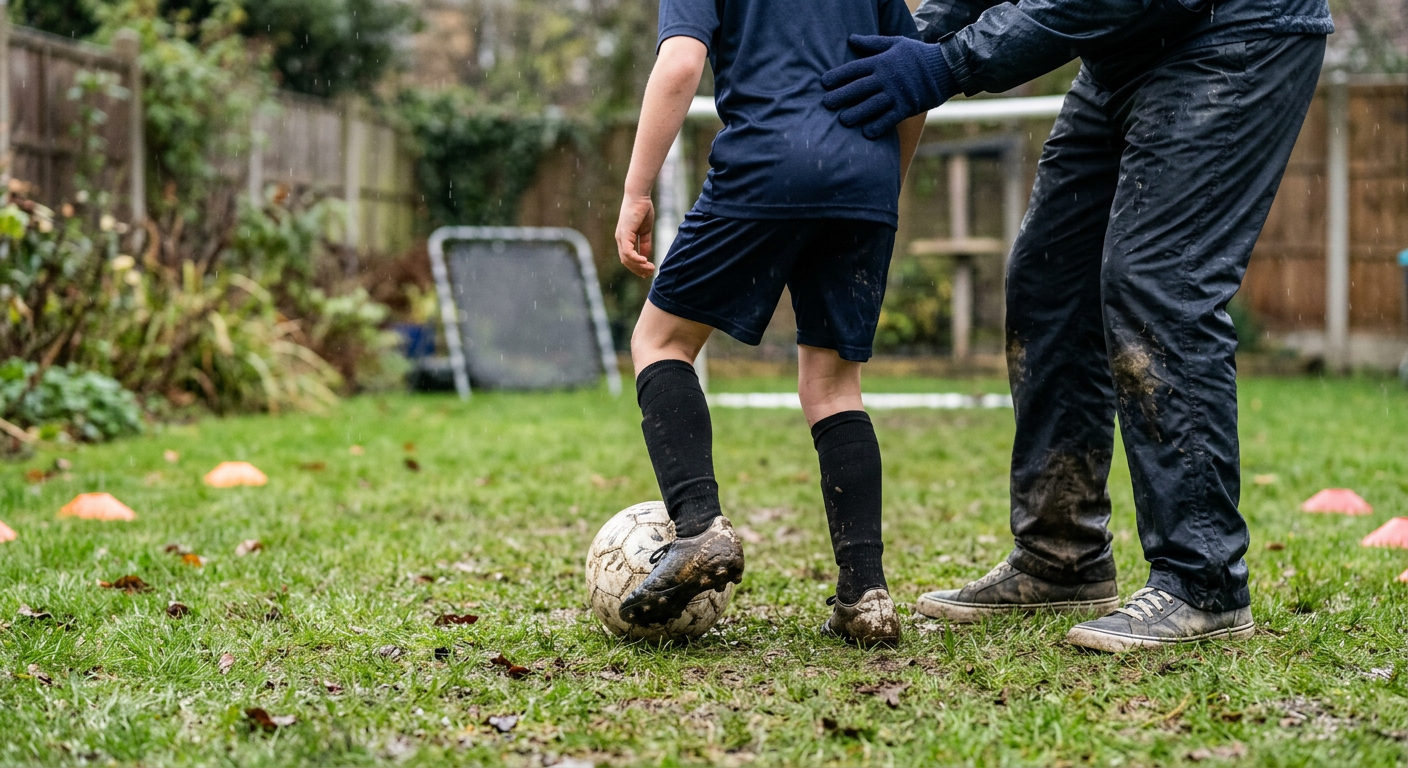
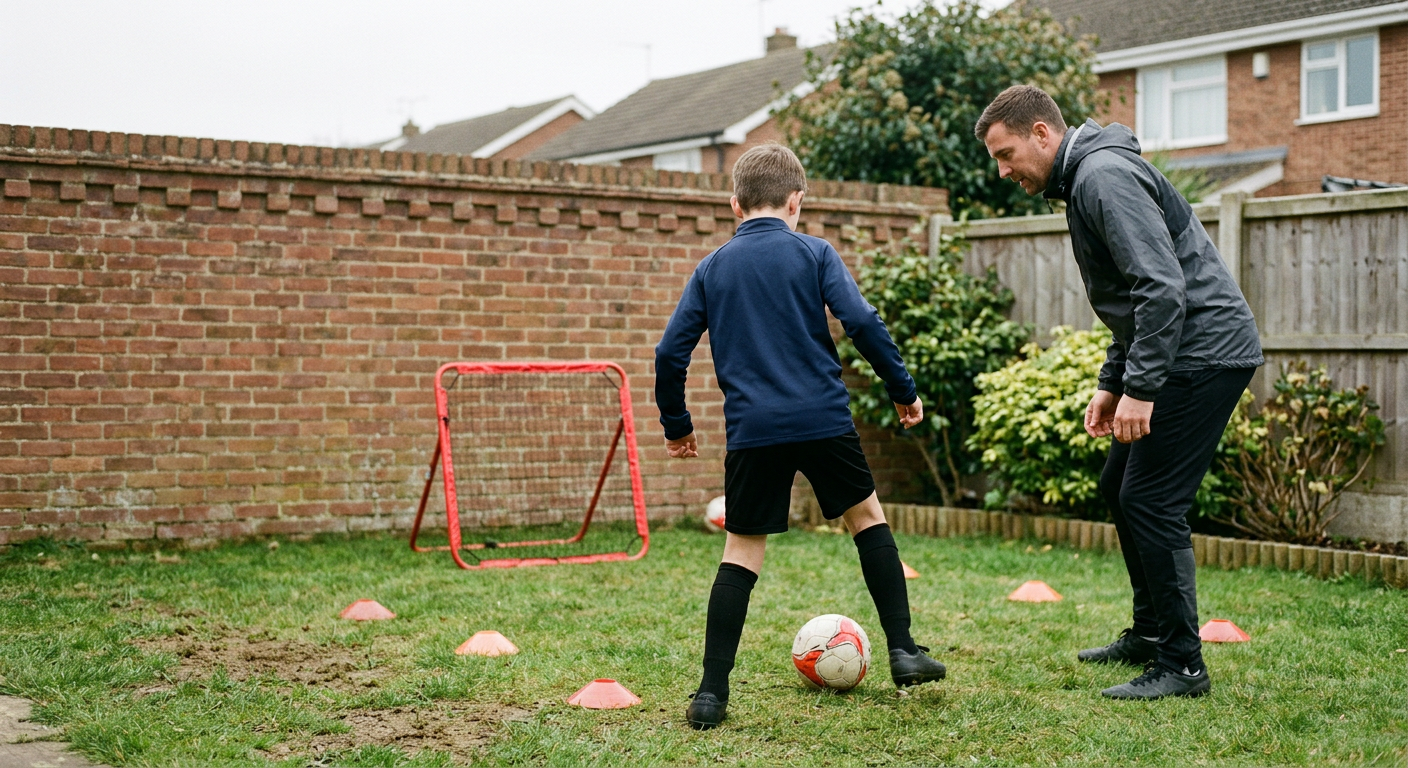
Encourage your child to practice these drills at home, even if it's just in the garden or a local park in Winchmore Hill or Grange Park. The more comfortable they become with the ball in tight spaces, the more confident they'll be when an opponent closes them down in a game.
Ready to see how dedicated, individualised coaching can elevate your child's close control under pressure? Book an initial evaluation session to discuss their specific needs and goals.
Frequently asked questions
Written by
Founder and head coach at Pitch Ready Football. Alejandro runs one-to-one and small-group youth coaching sessions across North London, focused on ball mastery, confidence, and long-term development for children of all abilities.