On this page
A good first touch is the foundation of almost everything positive you do on the football pitch. It dictates your next move, your speed of play, and ultimately, your confidence with the ball. For young players, however, perfecting that initial contact can be a real challenge. As a coach working with children across Enfield and surrounding areas like Southgate and Winchmore Hill, I often see recurring first-touch errors. Understanding these common mistakes and, more importantly, knowing how to address them can make a big difference to a child's development.
Why the First Touch is So Important
Think about it: whether you're receiving a pass from a teammate, controlling a long ball, or even just picking up a loose ball, your first touch sets the stage. A poor first touch often means:
- Loss of Possession: The ball bounces too far away, straight to an opponent.
- Wasted Time: The player has to chase the ball, slowing down the attack or defence.
- Limited Options: With the ball misplaced, the player's next pass, shot, or dribble becomes far more difficult or impossible.
- Frustration: Repeated errors can knock a child's confidence.
Conversely, a good first touch creates time and space, allows for quicker decision-making, and maintains possession, leading to more enjoyable and effective play.
Common First-Touch Mistakes
1. "Cement Feet" – The Stiff Leg
This is perhaps the most common issue. The child presents a rigid foot, almost as if it's made of concrete. When the ball arrives, it simply bounces off, often in an unpredictable direction. There's no absorption or softening of the impact.
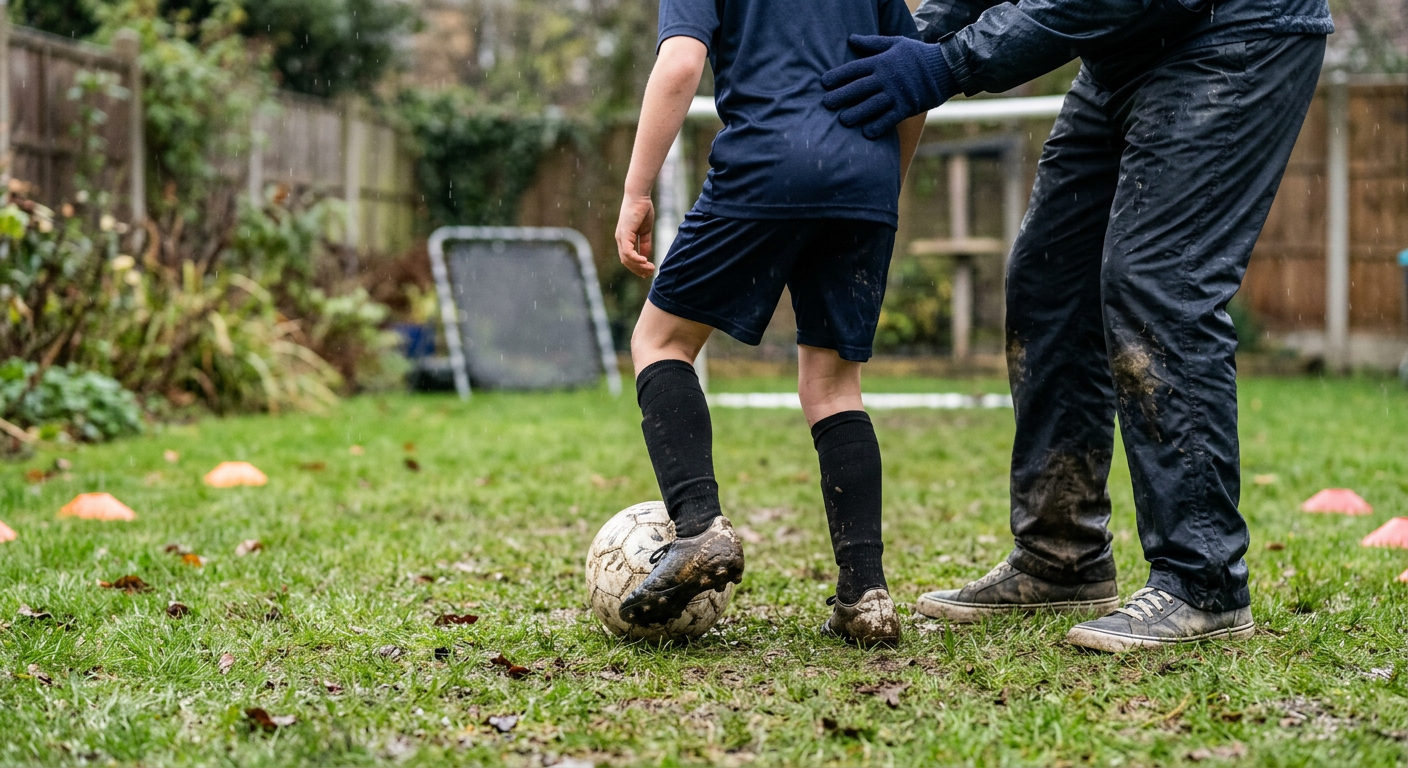
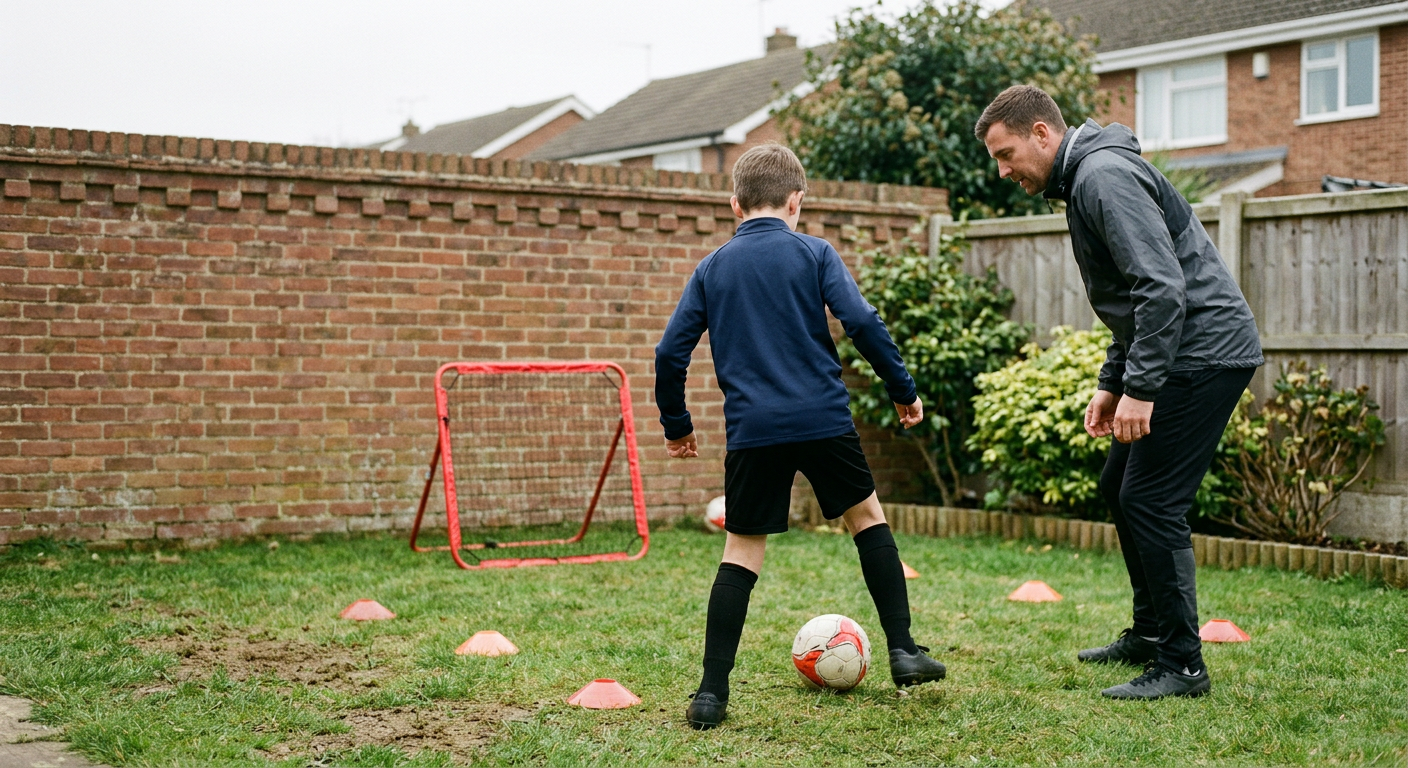
The Fix: We need to teach "soft feet." This involves coaching the child to withdraw their foot slightly as the ball makes contact, cushioning the impact. Imagine catching an egg – you wouldn't use a rigid hand. Using the inside of the foot (instep) or the outside (outstep) with a slightly relaxed ankle is crucial. Simple drills like throwing the ball against a wall and receiving it with a soft touch, focusing on keeping the ball within a small area, are very effective.
2. Lack of Awareness – Not Knowing Where to Put the Ball
Sometimes, the child manages a soft touch, but the ball still ends up in a poor position – either directly into an opponent's path, or to a place where they're immediately under pressure. This often stems from a lack of scanning and foresight.
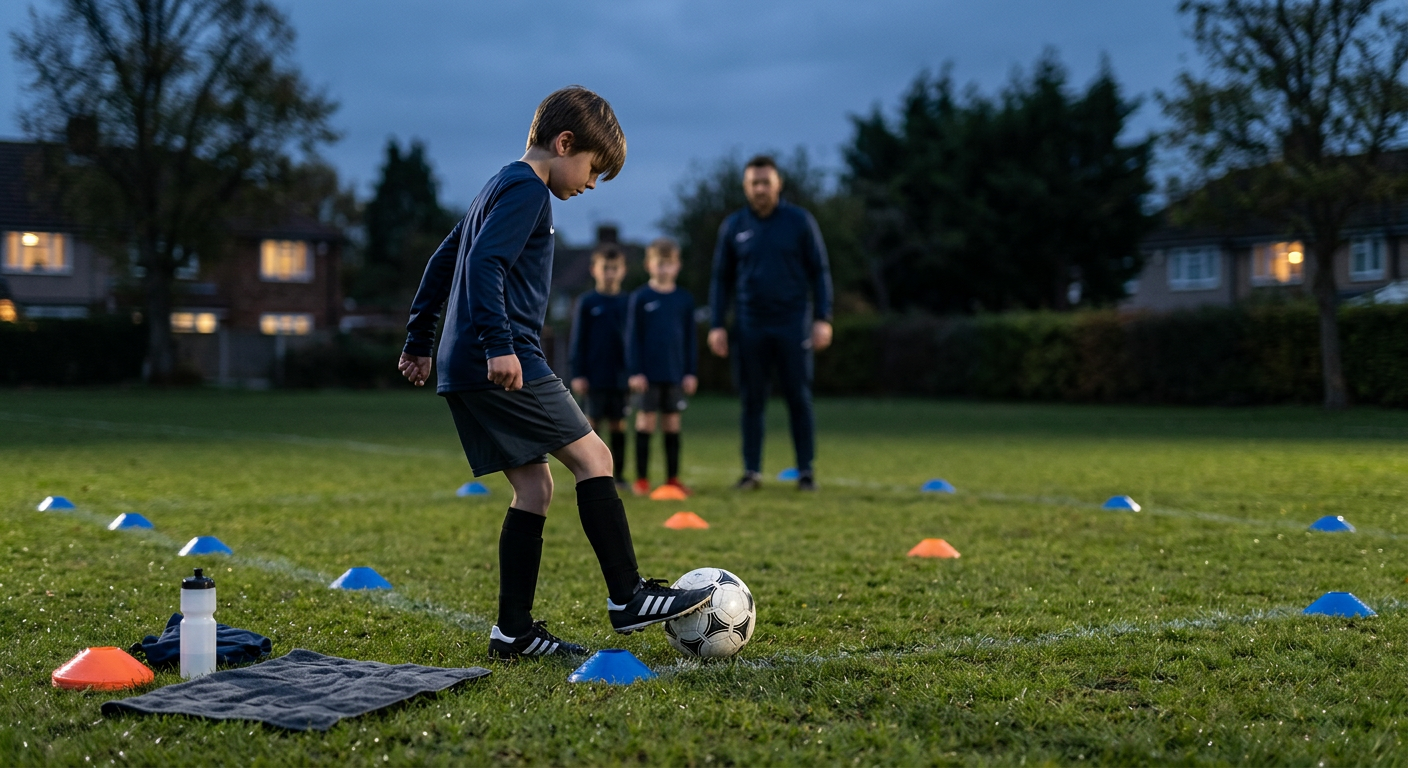
The Fix: Before the ball even arrives, encourage children to "scan" the pitch. Ask them: "Where are the defenders? Where are your teammates? Where do you want to go next?" The first touch should be intentional, moving the ball into space, away from immediate pressure, or directly into a position to make the next pass or dribble. Cone drills where the child has to receive and quickly move the ball to one of two pre-defined "safe" areas can help develop this spacial awareness.
3. Eye Off the Ball
This is fundamental but often overlooked. Children, especially younger ones, can sometimes get distracted or look up too early, losing sight of the ball just as it's making contact with their foot. This leads to miskicks and poor control.
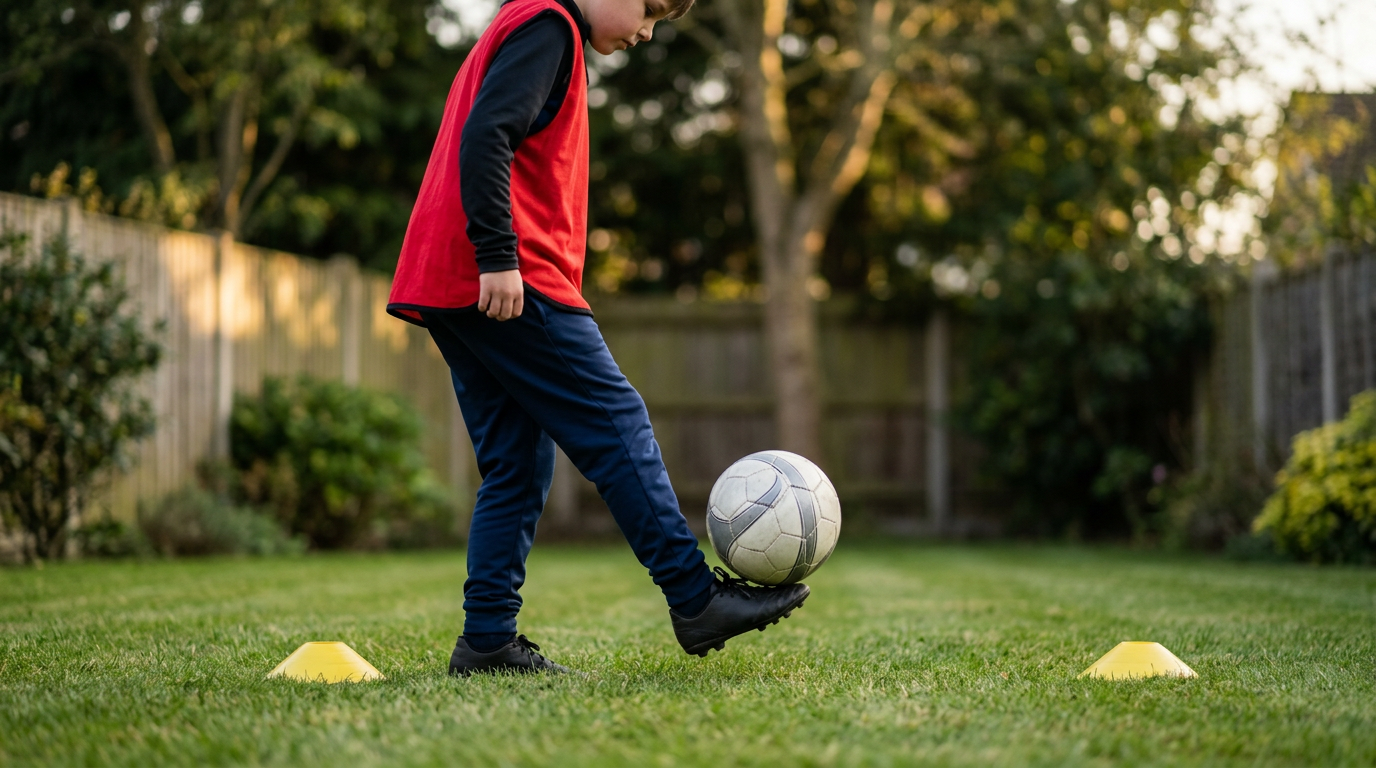
The Fix: Emphasise the importance of watching the ball all the way onto the foot. It sounds simple because it is. Drilling fundamentals such as juggling, even just two or three touches at a time, forces attention on the ball. Short-distance passing drills focusing purely on accuracy of touch and looking at the point of contact can reinforce this.
4. Over-Complication – Trying Too Much
Some children, particularly those who are keen to impress, might try to execute a flashy or difficult first touch when a simple, effective one would suffice. This often leads to errors.
The Fix: Reinforce the principle of simplicity and effectiveness. The best first touch is one that puts you in the best position for your next action, which isn't always the most spectacular. Encourage them to master the basic cushioned touch first. Explain that consistently good, simple touches build confidence and allow for more advanced techniques later. Our dedicated sessions on improving a child's first touch heavily focus on these foundational elements before progressing.
Practice Makes Progress
Improving a child's first touch isn't about magical quick fixes; it’s about consistent, focused practice. Short, regular drills are more effective than long, infrequent ones. Encourage your child to practice against a wall, with a partner, or even just dribbling and stopping the ball in a small space at home in areas like Grange Park or Bush Hill Park. The more repetitions they get, focusing on the quality of that first contact, the more natural and effective their first touch will become.
If you're looking for tailored support for your child to hone their skills, consider booking an evaluation session with us. We'll assess their current abilities and provide a clear plan for improvement.
Frequently asked questions
Written by
Founder and head coach at Pitch Ready Football. Alejandro runs one-to-one and small-group youth coaching sessions across North London, focused on ball mastery, confidence, and long-term development for children of all abilities.