On this page
For parents exploring defending basics for young players, here's what our Pitch Ready coaches suggest.
Whether your child plays centre-back or striker, defending well makes them more useful to their team. Coaches pick players who defend from the front. Here's what we teach in defending and tackling sessions with children across Enfield and Cockfosters.
The stance
Slightly side-on, knees bent, weight on the balls of the feet, one foot half a step in front. If a defender is square to the attacker with straight legs, they've already lost.
Jockeying — the skill children never get taught
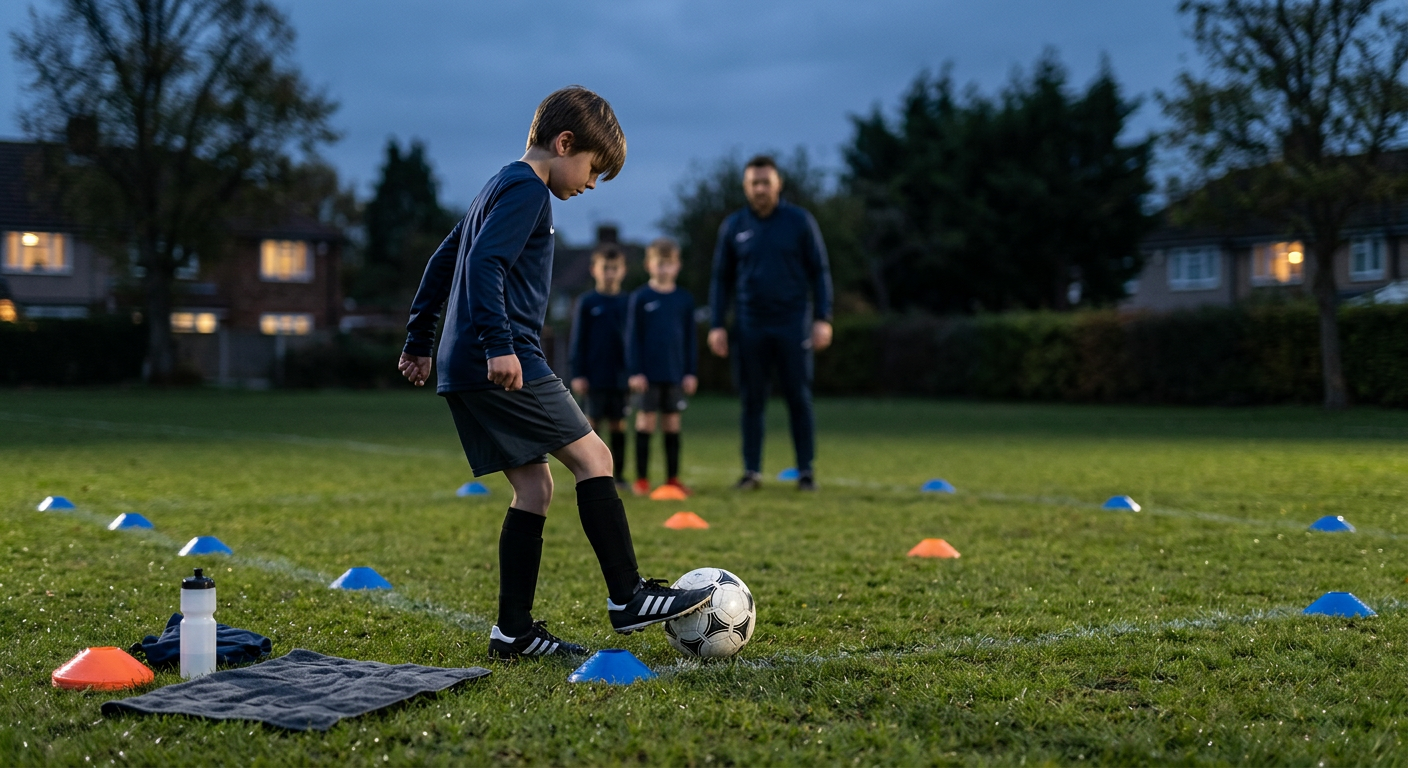
Jockeying means slowing the attacker down without diving in. We drill it in a small channel: attacker with the ball, defender must delay them for six seconds without tackling. Almost no under-11s can do this on the first try — after two weeks, most can.
When to tackle
Only when the ball is more than half a metre from the attacker's foot, or when you know a teammate is behind you. Otherwise, keep jockeying.
The angle you show the attacker
Force the attacker onto their weaker foot or toward the touchline. Never dive in centrally — you invite a nutmeg.
Defending as a team
Once your child gets 1v1 defending, add cover: one defender pressures, one covers behind. This is the shape every young team needs but rarely practises.
Body language
Aggressive defenders don't shout — they close space quickly and stay on their feet. Sliding tackles are almost always a sign the defender got their positioning wrong ten seconds earlier.
Effective defending is often misunderstood as a purely physical part of the game. Parents frequently watch from the touchline and expect to see big tackles or aggressive interceptions. However, at the youth level, the most successful defenders are those who use their heads as much as their feet. Teaching defending basics for young players begins with understanding that winning the ball back is usually the final step of a much longer process involving positioning and patience.
The importance of body shape and patience
One of the most valuable skills a young player can develop is the art of jockeying. This means staying between the attacker and the goal without lunging in for the ball. When a player dives into a tackle too early, they are easily bypassed. Instead, we teach children to keep their knees bent, stay on the balls of their feet, and adopt a side-on stance.
This body position allows them to track the attacker's movement and force them towards the touchline, away from the danger zone in front of the goal. By staying patient, the defender forces the attacker to make a decision. Often, the attacker will make a heavy touch or a poor pass, allowing the defender to regain possession safely.
How our sessions help develop these skills
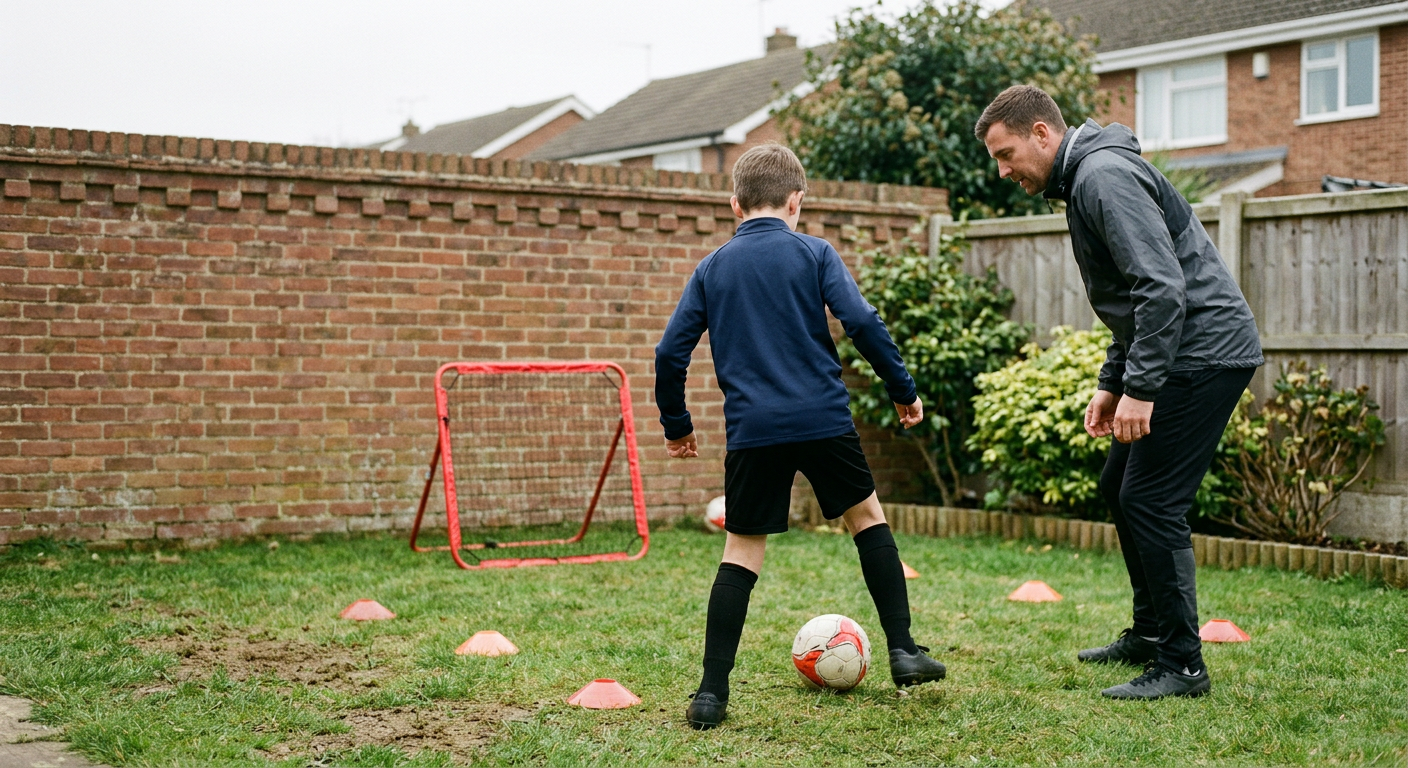
In our one-to-one coaching sessions in Enfield, we create a controlled environment where players can practise these defensive movements repeatedly. We focus on closing the distance quickly but slowing down as the defender approaches the ball carrier. This "slow down on approach" technique prevents the attacker from using the defender's own momentum against them.
We use specific drills that focus on 1v1 scenarios. These sessions help players recognise the visual cues that indicate an attacker is about to move, such as a drop of the shoulder or a glance at the ball. By working individually with a coach, children can receive immediate feedback on their footwork and positioning. This helps them build confidence in their ability to stay calm under pressure, which is a fundamental part of becoming a well-rounded football player.
Ready to see this in a session?
If your child would benefit from focused 1-to-1 coaching, defending and tackling coaching with Pitch Ready or get in touch to talk through what they need next.
Frequently asked questions
Written by
Founder and head coach at Pitch Ready Football. Alejandro runs one-to-one and small-group youth coaching sessions across North London, focused on ball mastery, confidence, and long-term development for children of all abilities.