On this page
For children playing in defensive positions, understanding timing and correct body shape are two fundamental elements that can significantly improve their effectiveness on the pitch. While raw athleticism is important, these technical aspects allow young defenders to read the game, intercept passes, and make crucial tackles without needing to be the fastest or strongest player. Focusing on these areas in defender training for children lays a strong foundation for future development.
The Art of Timing
Timing in defence isn't just about the tackle; it's about anticipating play, knowing when to press, when to drop, and when to commit.
When to Engage
One of the most common mistakes young defenders make is committing too early. This often leaves them – and their team – exposed. We teach children to delay their tackle where possible, forcing the attacking player to make a decision or hold the ball. This "delaying tactic" encourages patience and allows teammates to get back and offer support. We practice scenarios where defenders hold their tackle until the attacker is in a less dangerous area, or until a clear opportunity arises.
Intercepting Passes
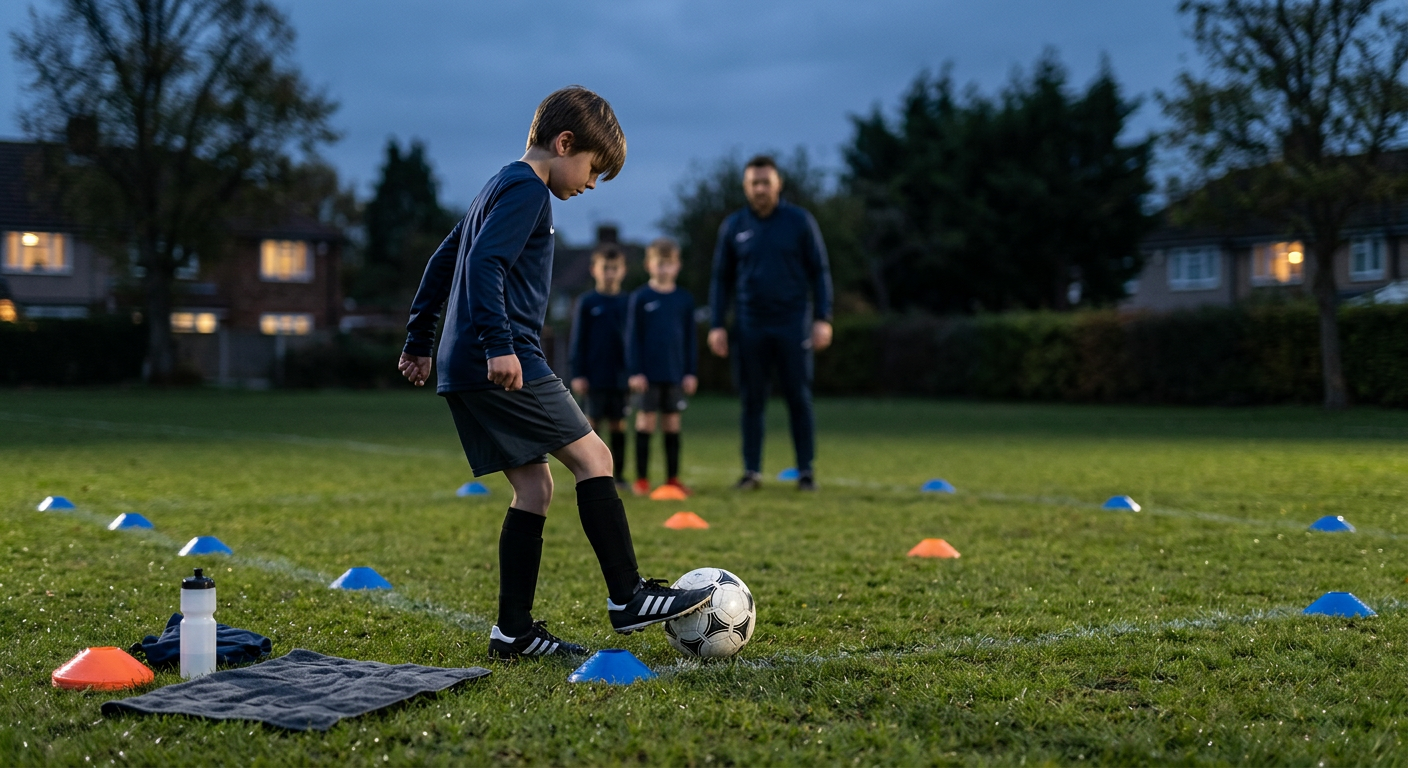
Good timing is vital for interceptions. This involves reading the attacker's body language and the direction of their pass. Drills focus on anticipation – predicting where the ball is going rather than just reacting to it. Simple cone drills where children have to step in front of a "pass" before it reaches a target player can be highly effective. This also ties into spatial awareness, understanding where dangerous spaces are on the pitch, particularly around the box in Enfield and across North London.
Pressing and Covering
Knowing when to press the ball and when to cover space is a key timing decision. If one defender presses, the others must cover the space left behind. This collective timing requires communication and understanding of team shape, which we introduce through small-sided games and tactical walkthroughs.
The Importance of Body Shape
Body shape dictates a defender's ability to react, change direction, and maintain balance. A poor body shape can make even the most athletic defender vulnerable.
Side-On Approach
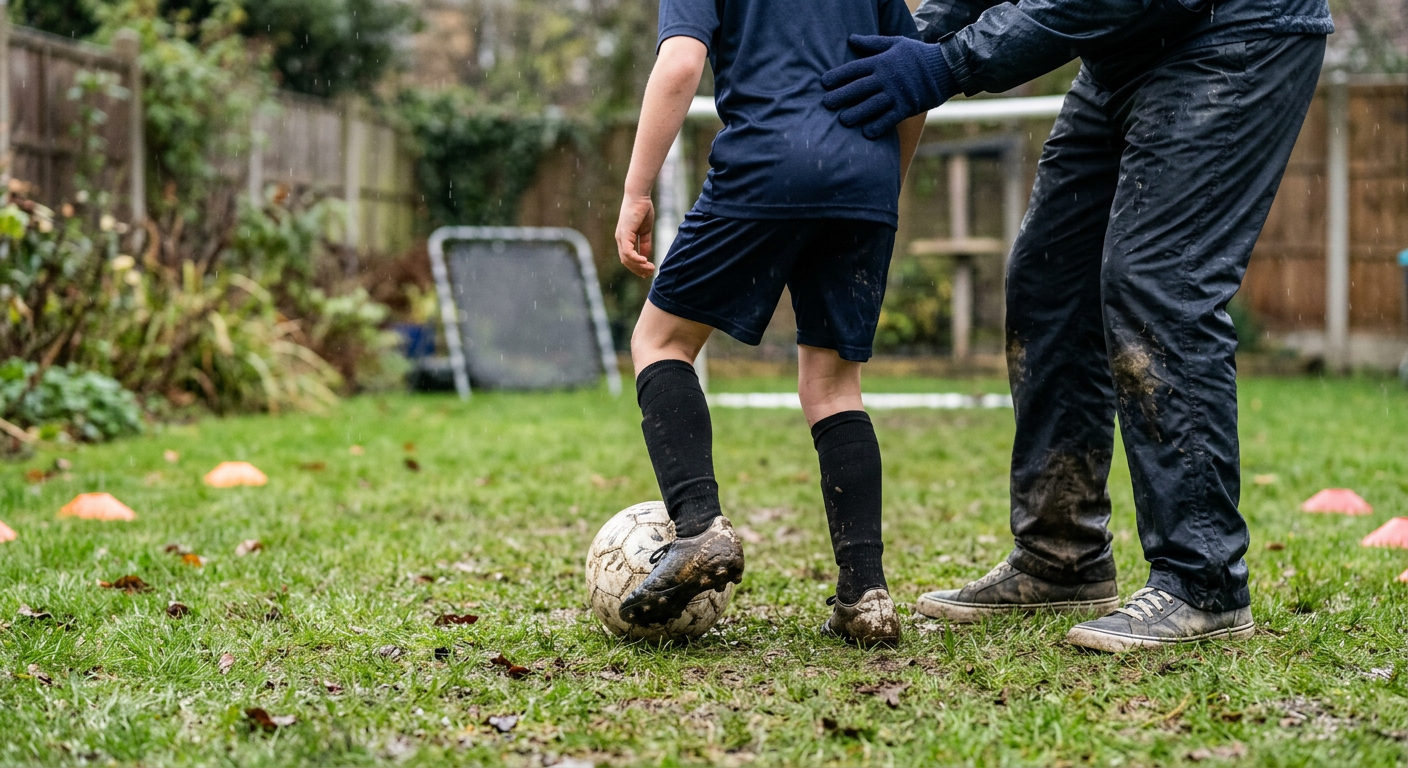
When closing down an attacker, defenders should aim for a "side-on" body shape rather than a flat, square-on stance. This allows them to pivot quickly in either direction, preventing the attacker from easily dribbling past them while maintaining an open stance to see both the ball and potential passing options. It facilitates a quicker recovery if the attacker beats them initially, offering a greater chance of getting a foot in or forcing an error.
Low Centre of Gravity
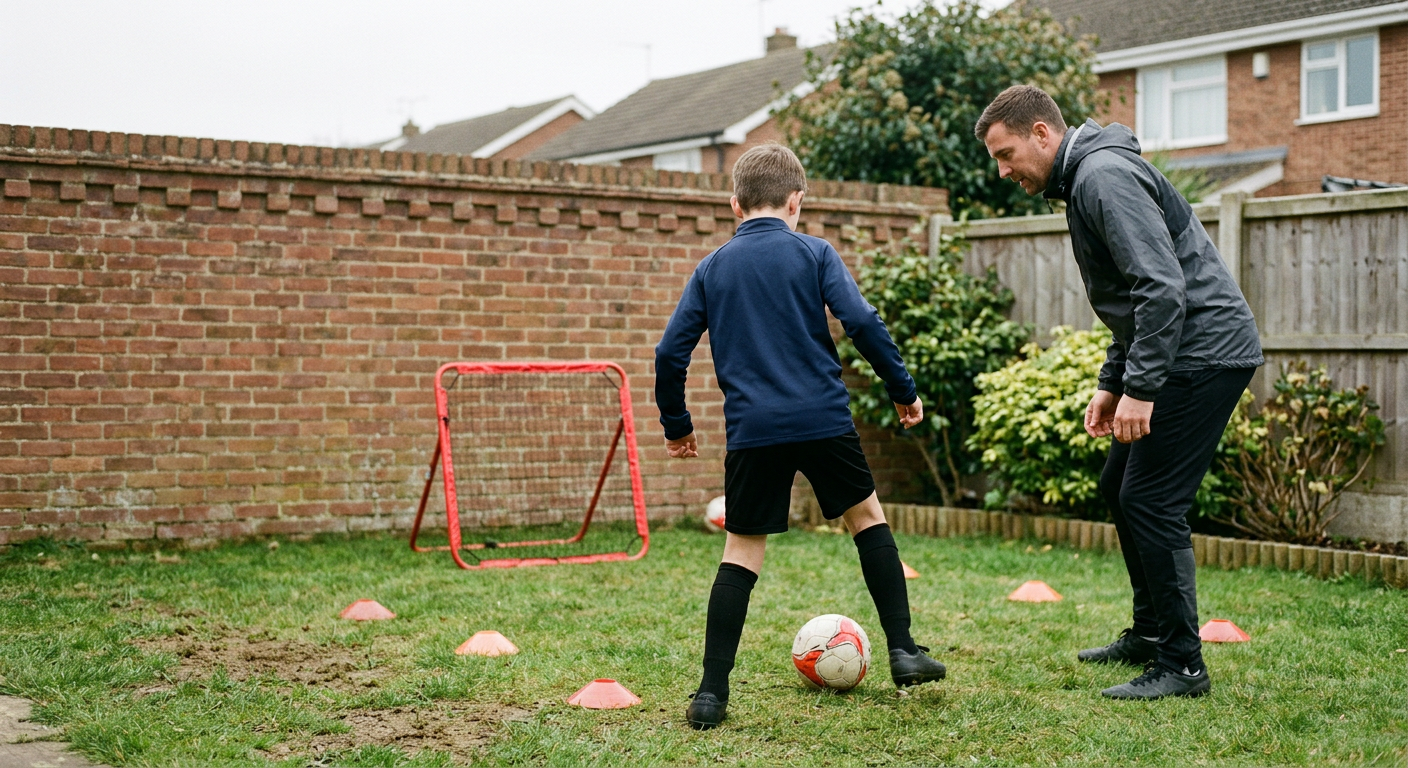
Maintaining a low centre of gravity is crucial for stability and agility. This involves bending the knees and keeping the weight slightly forward, ready to pounce or shift direction. We use agility ladder drills and shadow play to help children understand and practice this dynamic stance, preparing them for the unpredictable movements of attackers.
Open Body Shape for Vision
Defenders need to see the whole picture: the ball, the opponent, and teammates. An "open" body shape, particularly when marking or covering, allows them to scan the pitch effectively. This means not just watching the ball but constantly checking shoulders for runners and opposition positions. This awareness is incredibly difficult for young players, but consistent coaching can instil positive habits. We have specific modules of our defending and tackling coaching dedicated to developing these critical skills.
Integrating Timing and Body Shape into Training
We integrate these concepts into all our sessions. We use slow-motion walk-throughs to demonstrate correct body shape in different scenarios – pressing, recovering, or jockeying. Small-sided games naturally encourage defensive timing as players learn to make decisions under pressure. Repetition in focused drills, followed by application in game situations, reinforces these vital skills. Whether it’s a session in Winchmore Hill or Cockfosters, the principles remain the same.
Developing a strong understanding of timing and correct body shape transforms young defenders into more effective and confident players. These aren't just isolated skills; they are deeply interconnected and, when mastered, form the bedrock of solid defensive play.
If you're looking to enhance your child's defensive capabilities and give them a structured programme to develop these core skills, consider booking an evaluation session with us. We'll assess their current skill level and discuss how our tailored coaching can help them excel.
Frequently asked questions
Written by
Founder and head coach at Pitch Ready Football. Alejandro runs one-to-one and small-group youth coaching sessions across North London, focused on ball mastery, confidence, and long-term development for children of all abilities.